How Human Emotions Shape DNA: Three Groundbreaking Experiments

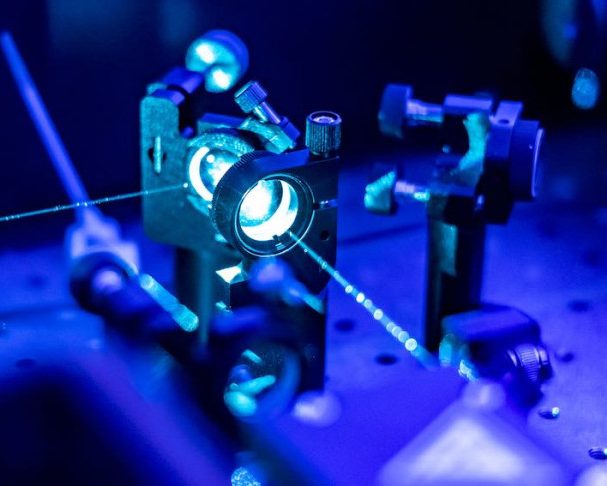
You can buy experimental Laser system for experiments in Wave Genetics and Torsion fields. Creation on their basis of individual meditative musical programs. We also translate into the melody the sequenced sections of genes, thereby producing Music of DNA.

How Human Emotions Shape DNA: Three Groundbreaking Experiments 1

How Human Emotions Shape DNA: Three Groundbreaking Experiments


Gregg Braden, scientist and engineer, has reported the details of three remarkable experiments suggesting that DNA can be directly influenced by human feelings and emotions. These findings were presented as part of his program “Healing Hearts — Healing Nations: The Science of Peace and the Power of Prayer.”

Braden notes that much ancient knowledge about spiritual traditions was lost when the Library of Alexandria burned — an estimated 523,000 manuscripts destroyed. Yet some of what modern science is now discovering may echo what those ancient teachings already knew.


Experiment 1: DNA Organizes Particles of Light

This experiment was conducted by Dr. Vladimir Poponin, a quantum biologist.

A vacuum was created inside a container, leaving only photons — particles of light. The distribution of the photons was measured and found to be entirely random, as expected. A sample of DNA was then placed inside the container, and the photon distribution was measured again.

This time, the photons arranged themselves in a specific, ordered pattern aligned with the DNA. Organic DNA had measurably influenced particles of inanimate matter.

The DNA was then removed from the container. The photons remained in the same ordered arrangement — oriented in the same direction as the DNA had been — even after the DNA was gone.

What was holding the photons in place? Braden suggests this points to the existence of a previously unrecognized energy field through which DNA exchanges information with its environment.


Experiment 2: DNA Responds to Its Donor Across Distance — Instantaneously

This experiment was carried out by the U.S. military.

White blood cells were collected from donors, and DNA was isolated and placed in a special chamber designed to measure electrical charges. The donor was located in a separate room and exposed to video clips designed to evoke a range of emotions. Both the donor’s emotional responses and the DNA’s electrical activity were monitored simultaneously.

The result: whenever the donor experienced an emotional peak, the DNA in the other room showed an identical electrical response at exactly the same moment. There was no delay — no signal transmission time whatsoever. The peaks and valleys in the donor’s emotional pulses matched the DNA’s electrical pulses precisely.

Researchers then asked: how far could the donor be separated from their DNA and still produce the same result? The experiment was discontinued at 50 miles — and the effect remained identical. No lag time. No transmission delay.

Braden’s interpretation: living cells communicate through a form of energy that is unaffected by time or distance. It is, in his words, a non-local form of energy — one that exists everywhere, at all times.


Experiment 3: Emotions Physically Change the Shape of DNA

This experiment was conducted by the Institute of HeartMath, and its findings were published in a report titled “Local and Nonlocal Effects of Coherent Heart Frequencies on Conformational Changes in DNA.”

Several samples of placental DNA — considered among the most ancient forms of DNA — were placed in containers where physical changes could be measured. A group of trained participants, each capable of intentionally generating strong emotions, were given 28 vials of DNA. They were guided to consciously experience specific emotional states.

The findings were striking:

  • When researchers felt gratitude, love, and appreciation, the DNA relaxed — the helix unwound and grew longer.
  • When researchers felt fear, anger, frustration, or stress, the DNA tightened and compressed — it became shorter, and many DNA codes were effectively switched off.
  • When participants returned to feelings of love, joy, and gratitude, the previously deactivated DNA codes switched back on.

The experiment was later repeated with HIV-positive patients. Experiencing feelings of love, gratitude, and appreciation was found to increase the body’s resistance by up to 300,000 times.

These changes exceeded anything explainable by known electromagnetic phenomena. The conclusion: people who are capable of sustaining deep states of love and appreciation can measurably alter the physical structure of their own DNA.


What Do These Experiments Tell Us?

Taken together, these three experiments point toward a profound principle: our emotional states are not just psychological experiences — they are biological signals that directly affect our genetic material.

Braden connects this to a broader framework. In his book The Isaiah Effect, he describes time not merely as a linear sequence of past, present, and future, but as having depth — a dimension containing all possible outcomes. Our feelings, he suggests, act as tuning mechanisms that activate one outcome over another, connecting us to the vast network of energy and matter that underlies all of creation.

The practical implication is straightforward: what we focus on and feel, we draw toward us. Fear sends a signal. So does love. Sustained states of joy, gratitude, and appreciation do not merely feel good — they appear to fortify the immune system, activate dormant DNA codes, and align us with outcomes that support our wellbeing.


The Two Wolves

An old Cherokee told his grandson about a struggle he felt within himself. He said:

“There are two wolves fighting inside my heart. One is vengeful, angry, and violent. The other is loving and compassionate.”

His grandson asked: “Which wolf will win?”

The old man replied: “The one I feed.”


The experiments referenced in this article are discussed in detail in Gregg Braden’s works, including Healing Hearts — Healing Nations and The Isaiah Effect.


No Comments

Add your comment

This site uses Akismet to reduce spam. Learn how your comment data is processed.