
Quantum-Biological Experiment: The Influence of MBER Spectrum on Pea Seed Growth
Abstract
This study describes an investigation into the influence of Modulated Broadband Electromagnetic Radiation (MBER) derived from a strawberry DNA extract on the growth and development of pea seeds (Pisum sativum). The spectrum was generated in the Adaris Laboratory using a custom-designed laser system (Adaris Laser v5). The obtained MBER signal was converted into a standard digital audio file (WAV format) and used as a modulating source in several experimental configurations.
The purpose of the experiment was to test whether such a spectrum could exert a quantum-informational effect on biological germination processes.
Introduction
Modern research in quantum biology suggests that biological structures may not only store but also transmit information via electromagnetic fields and coherent photon emission. On this basis, hypotheses have emerged proposing that living systems can interact with so-called informational spectra of biological substances.
At Adaris Laboratory, a series of experiments was conducted to record and apply such spectra. Using a custom-built Adaris Laser v5 system, the MBER spectrum of an aqueous extract of strawberry DNA (Fragaria × ananassa) was obtained. This spectrum was considered to carry a structural or bioinformational component of the original biological material.
The next step was to examine whether the recorded spectrum could influence plant growth when reproduced in various energetic fields.
Materials and Methods
Spectrum Source
The aqueous extract of strawberry DNA was scanned with a laser beam in the Adaris laboratory. During this process, Modulated Broadband Electromagnetic Radiation (MBER) was generated as the laser interacted with the substance in a glass cuvette.
The resulting signal was captured and converted into a WAV-format digital audio file for use as a modulating input in the experiment.
Experimental Setup
Four groups of pea seeds were used to test the effects of the MBER spectrum:
- Control group – no exposure.
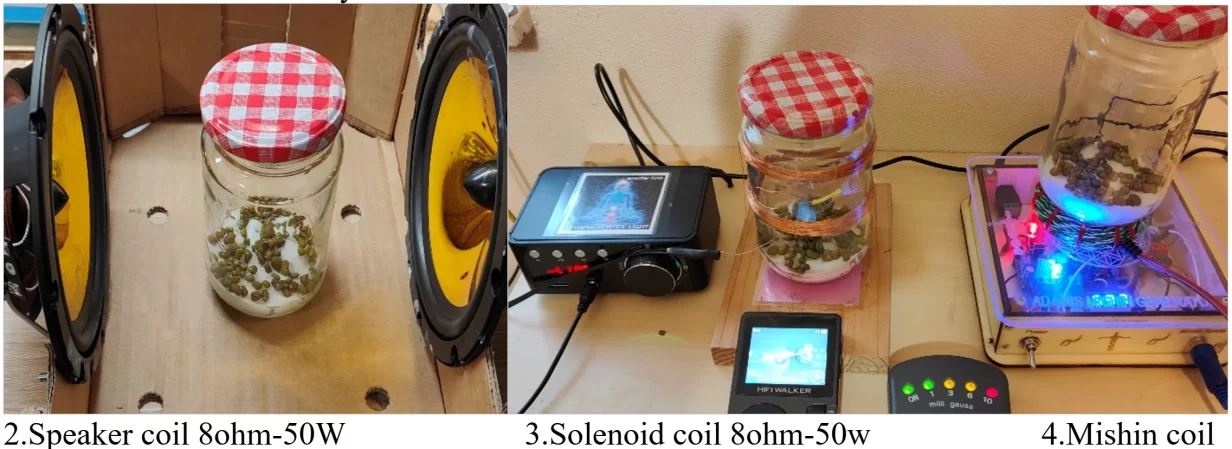
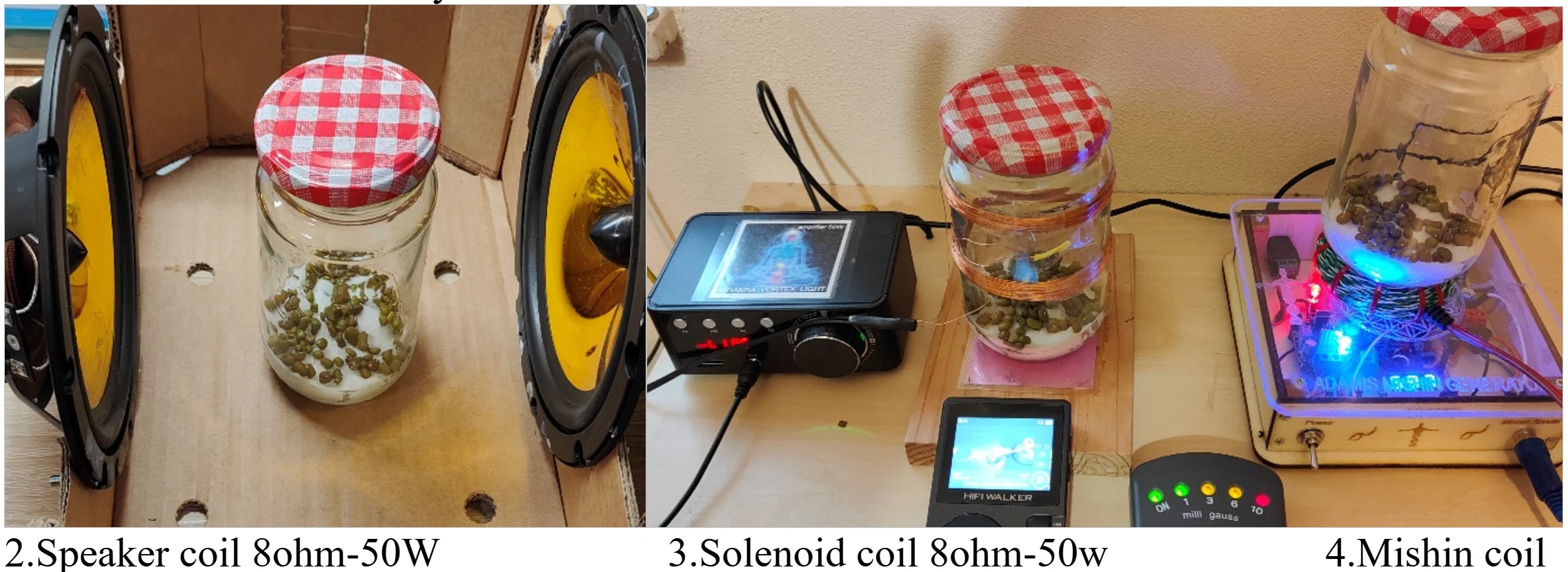
- Acoustic exposure – stereo speakers emitting the MBER-modulated WAV file.
- Solenoid magnetic field – coil (solenoid) powered by the same MBER signal.
- Mishin coil field – Mishin-type toroidal coil modulated with the same spectrum.
Each exposure setup was active for 1 hour per day with an amplifier power of 50 W.
The experiment lasted 13 days, with all groups kept under identical environmental conditions (temperature, humidity, and lighting).
Results
Daily observations were made, with photographic documentation on days 1, 4, 6, 7, 8, and 13.
- Control group: minimal germination rate, weak root and shoot development.
- Acoustic exposure: faster sprouting, uniform stem growth, and healthier seedlings.
- Solenoid field: moderate improvement compared to the control, but less than in the acoustic setup.
- Mishin coil: most pronounced effect — vigorous shoot growth, dense leaves, and strong vitality.
Overall, plants exposed to the MBER spectrum demonstrated noticeably accelerated growth compared to the control group.
The strongest effect was observed with the Mishin coil configuration.
Discussion
The results suggest that biological systems may be sensitive to specific frequency structures within electromagnetic spectra—especially those of biological origin. The MBER spectrum recorded from laser interaction with strawberry DNA extract may contain vibrational components corresponding to the molecular structure of the original DNA, potentially resonating with cellular processes in plants.
The differing effectiveness among acoustic, solenoidal, and vortex-field exposures indicates that the type of energy carrier plays a key role in transmitting spectral information.
It is possible that the observed effects are related to coherent quantum processes at the biomolecular level – mechanisms that warrant further investigation within the field of quantum biophysics.
Conclusion
The experiment demonstrated that exposure to an MBER spectrum derived from a strawberry DNA extract positively influenced the growth and development of pea seeds.
The most significant results were obtained using the Mishin coil, suggesting high plant sensitivity to specific types of modulated electromagnetic fields.
These findings support the hypothesis of potential quantum-informational interactions between living systems and electromagnetic fields containing biologically derived spectral structures.
Further studies may expand our understanding of the role of such spectra in biophysics and biotechnology.
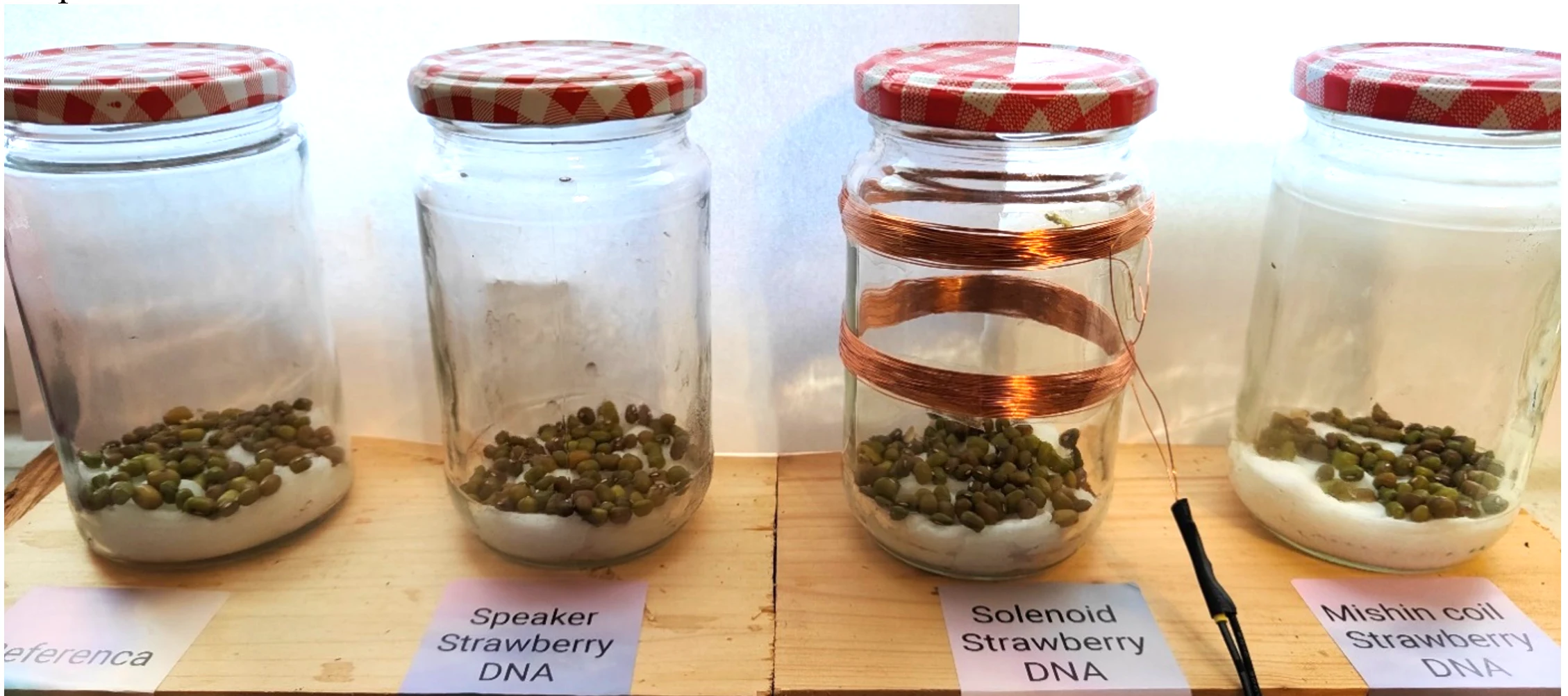
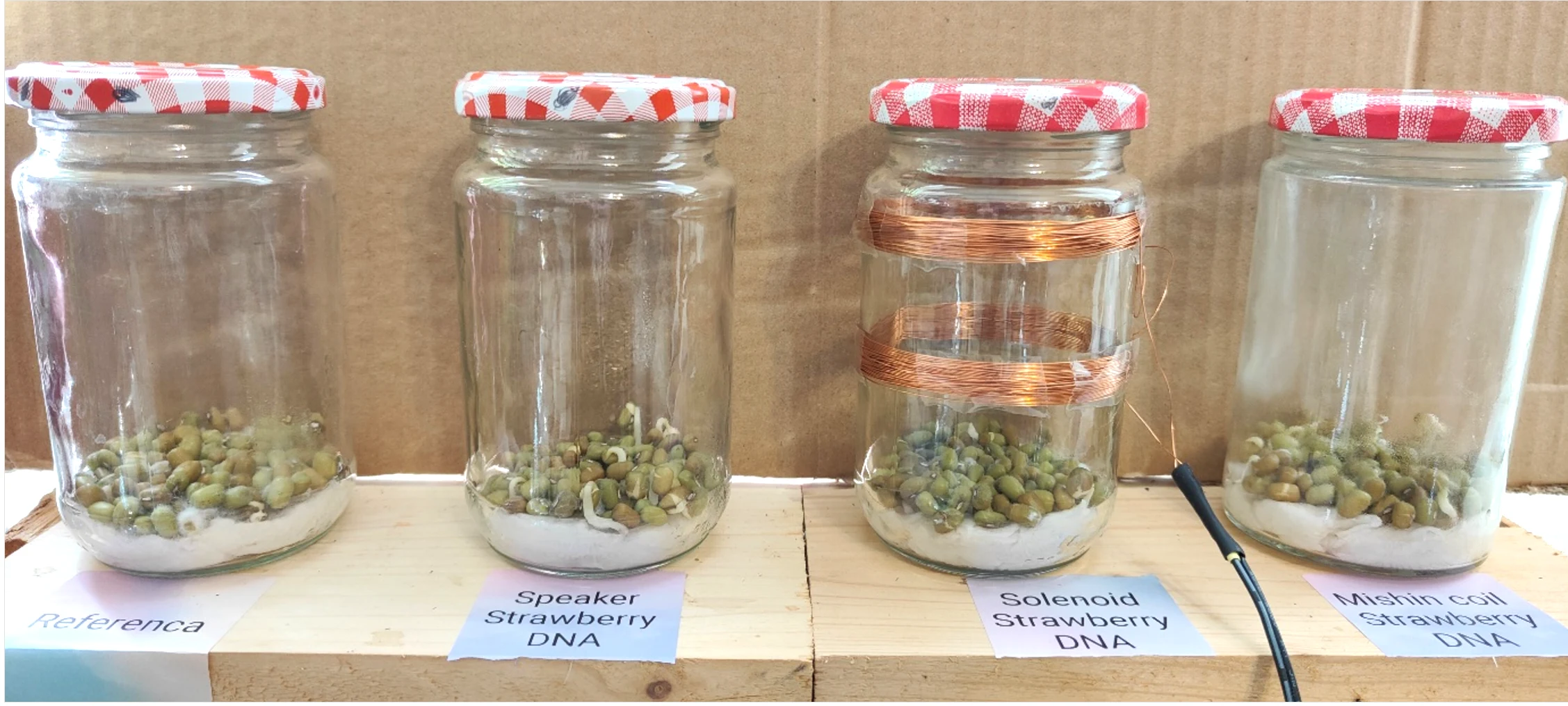
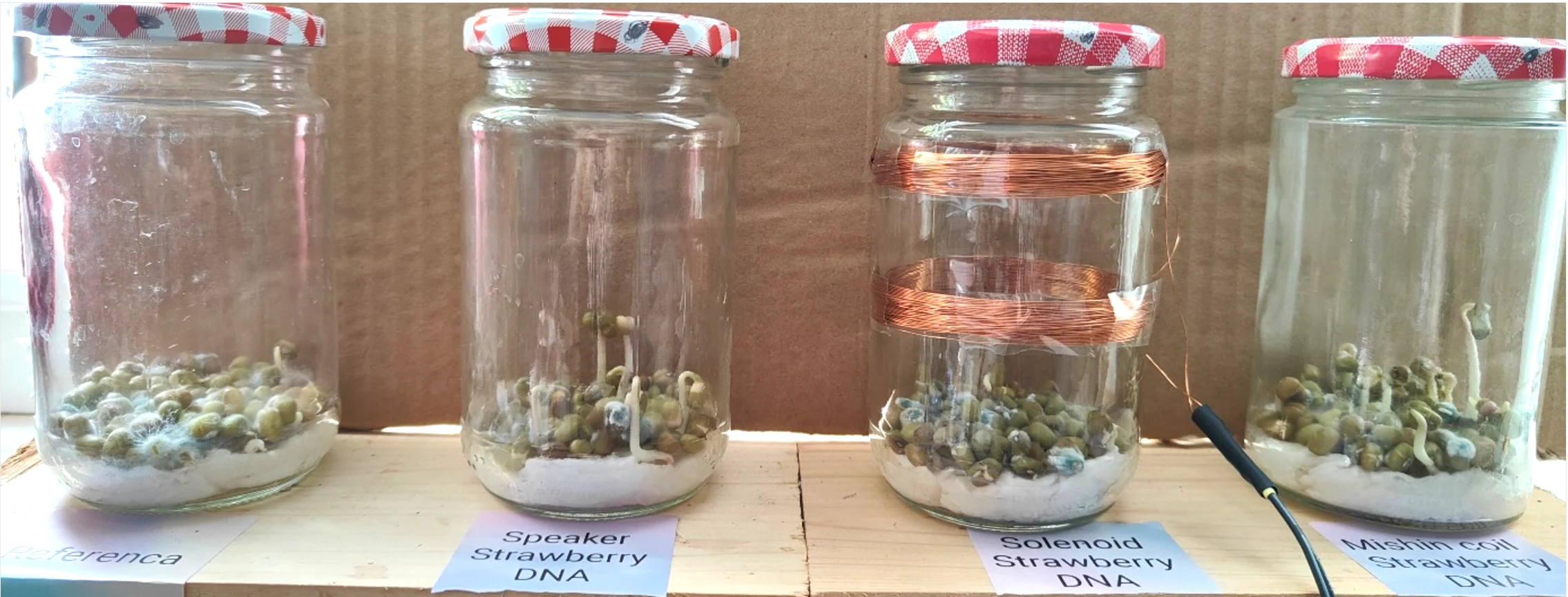
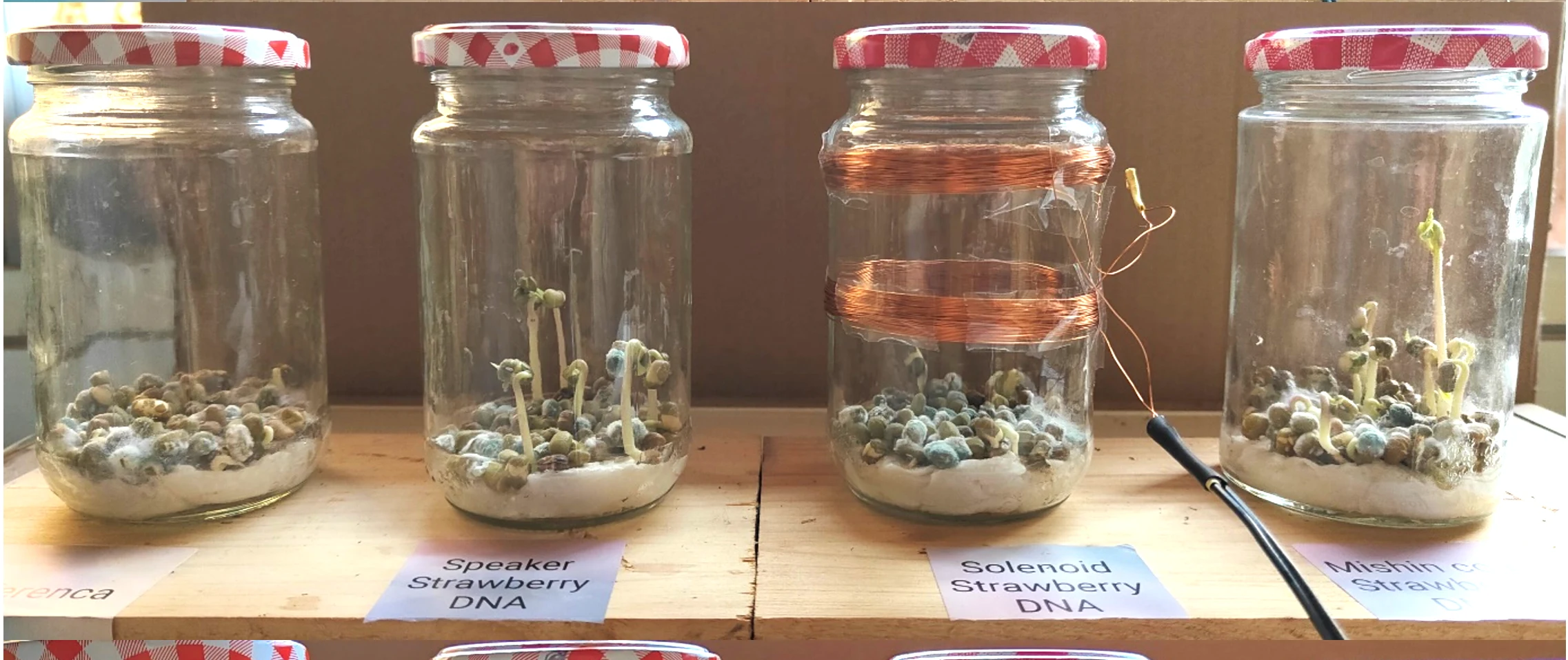
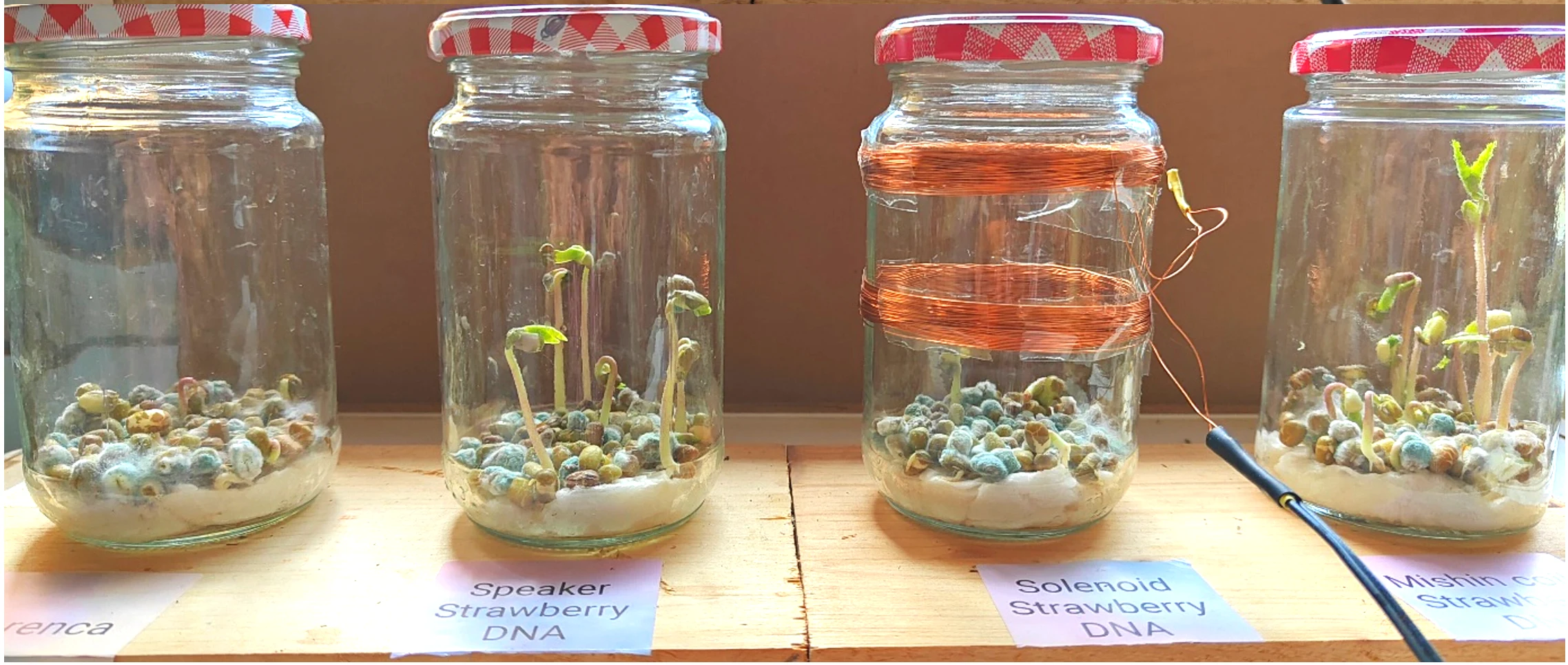
In the picture 1,4,6,7,8 days of the experiment.
Organic pea seeds were used in the experiment.
Peas grow best in the modulated Mishin energy field, followed by the energy field with speakers and the solenoid magnetic field.
Peas grow worst in a glass container reference.
Rado Peternelj Kozana 22.03.2025 Slovenia